
Jesse and joy
Mourning the death of a man who gave my family so much hope

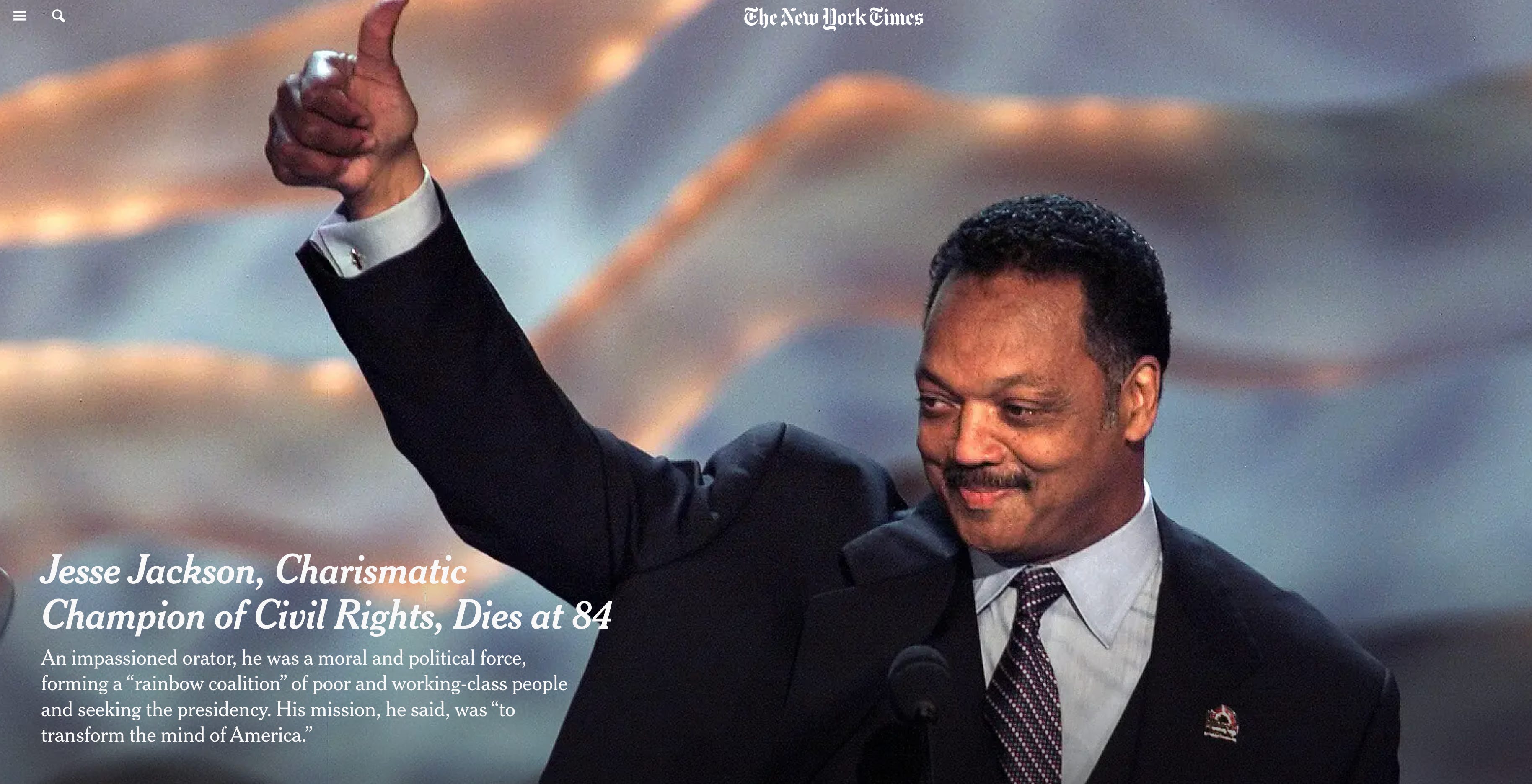
(Read Jackson’s obituary today in The New York Times.)
My mother became a U.S. citizen months ahead of the 1984 presidential elections. She had suffered a life-altering stroke in 1982 that greatly diminished her cognitive abilities and left her half-paralyzed. Ma had always been a shy, unadventurous woman. Bound to a wheelchair, she became even more so.
My father, burdened with caring for Ma, decided it was best for them to return home to India, where he could afford to hire full-time household help. After a decade in Florida, they were set to fly home at the start of the new year. By then, Ma did very little outside the house, but there was one act she felt compelled to fulfill: to cast a vote for the first time in America.
She had watched the campaigns unfold on television and was inspired by the Rev. Jesse Jackson, the charismatic civil rights icon who was running on a message of hope. He aspired to build a “Rainbow Coalition” of the poor, downtrodden and forgotten people in America. In particular, Ma was touched by a line in Jackson’s electrifying speech at the Democratic Convention that year:
“The Rainbow includes disabled veterans,” Jackson said. “The color scheme fits in the Rainbow. The disabled have their handicap revealed and their genius concealed; while the able-bodied have their genius revealed and their disability concealed. But ultimately, we must judge people by their values and their contributions. Don’t leave anybody out. I would rather have Roosevelt in a wheelchair than Reagan on a horse.”
Ma wiped tears from her eye when she heard a mention of wheelchairs. She repeated that line about Roosevelt in a wheelchair countless times to us and anyone who visited our home. With that one line, Jackson had won Ma over.
He had won me over, too, albeit with more than just his oratory skills. Jackson spoke to me as he did millions of other people of color in a voice woven from struggle, conscience and the daring promise of power not yet fully shared. As a young college student, I had been on the streets protesting against apartheid, against U.S. intervention in Central America, against racism, sexism and Reaganomics. In Jackson, I saw protest turn into possibility. For the first time in my young adult life, I felt hope.
I campaigned for Jackson in 1984 and traveled to South Carolina in the spring, ahead of that state’s primaries. Jackson fell short of victory but the results established him as the first serious Black presidential contender.
I could not vote for Jackson; I did not become a naturalized citizen until 2008. The first ballot I ever cast in my entire life was for another Black man: Barack Obama. But I will never forget the smile on my mother’s face after she cast her vote. Jesse had brought her so much joy in a time in her life when joy seemed in short supply.
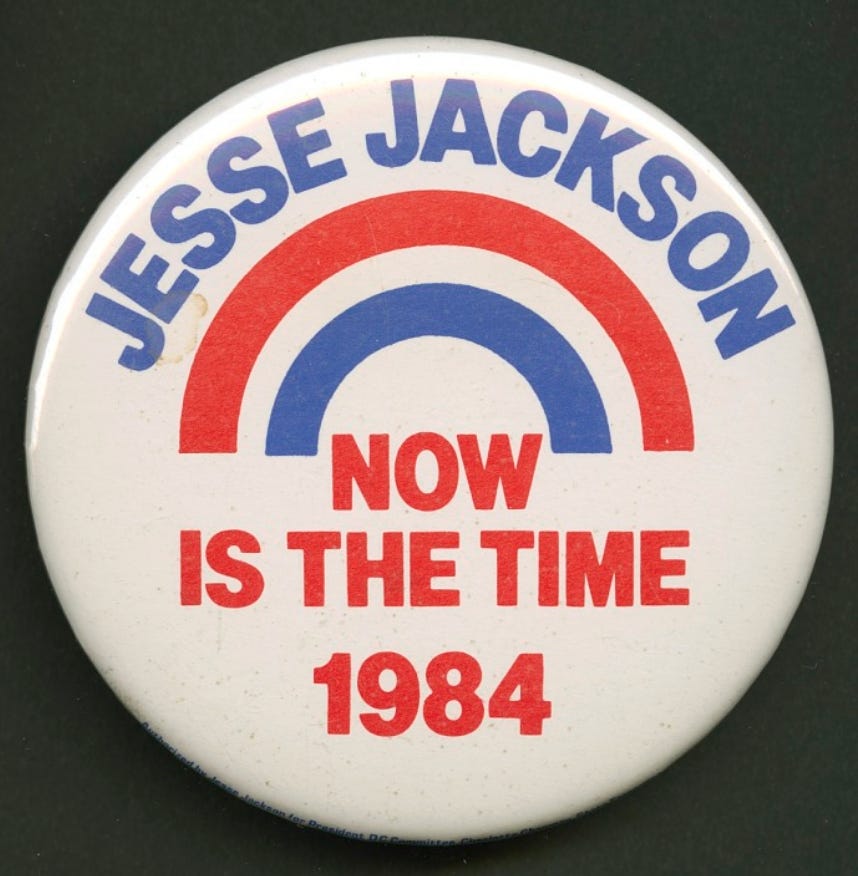
Many years later in Kolkata, I was helping Ma reorganize her cupboard drawers and we came across a Jackson ’84 button that Ma had once pinned on her blouse with enormous pride. The metal had rusted in Kolkata's humidity but Ma wanted to keep it. We wrapped it in tissue and placed it in a velvet-lined jewelry case, next to her precious Japanese black pearls.
Thank you, Jesse, for the hope with which you filled our hearts. Rest in power.
He was a hero in my parents' household (and mine) too. Look up his appearance on Sesame Street in 1972, and come with me in my memory to visit my sister, six, and me, twelve, watching that on the TV on our kitchen table.
Moni, I'm so glad for your mother that she got that vote in.
For the longest time, I still had my "Run, Jesse, Run!" button but can't find it now.